Materials
Fiberglass Pipe
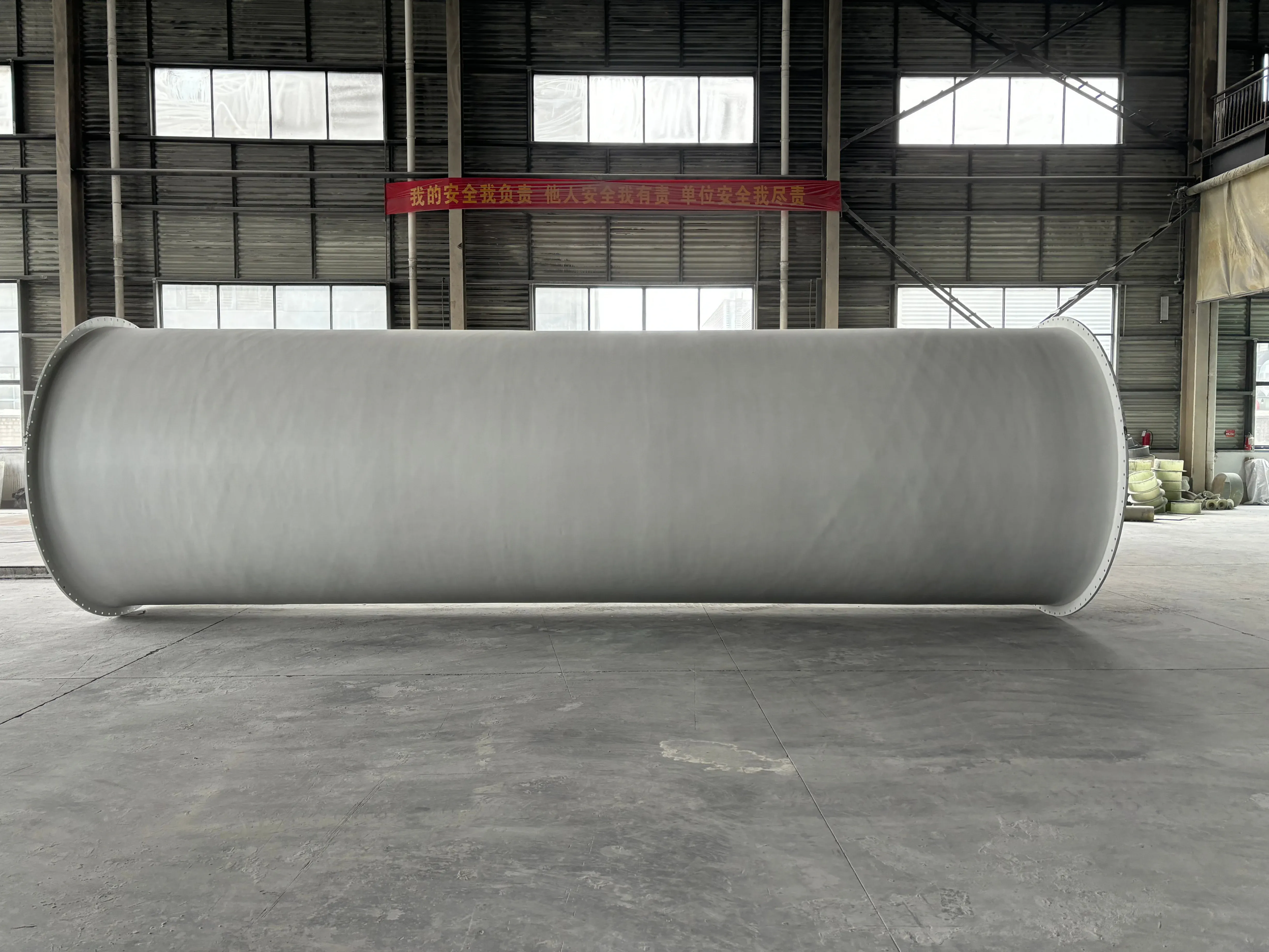
Custom FRP pipes ready for shipment — built to client specifications, inspected and loaded for delivery
How to Choose FRP Pipe for Your Project
A practical guide to selecting the right fiberglass pipe for your application — without over-engineering or cutting corners.
When you come to us sourcing FRP pipe, the options can feel wide open. Different diameters, pressure ratings, resin systems, and connection types — all of them affect how the pipe performs in the field.
In this guide, we break down the key factors you need to consider before placing an order, so you can make a decision that fits your project instead of guessing.
Know What the Pipe Will Handle
Before anything else, start with the operating conditions.
What fluid or gas will flow through the pipe? Is it corrosive? What is the operating temperature and pressure? Will the pipe be installed indoors or outdoors? Is it above ground or buried?
These answers determine everything that follows — resin type, wall thickness, diameter, and even the connection method.
Skipping this step is how projects end up with pipe that looks right on paper but fails in service. We always ask these questions first — before we recommend anything.
Pick the Right Resin
The resin is what gives FRP pipe its chemical resistance. At YAS, we have seen choosing the wrong resin become the most common — and most expensive — mistake.
Here is a quick reference we use when selecting resin systems for our clients:
- Isophthalic resin — Good general-purpose option. Works well for water drainage, mild chemical exposure, and ambient temperatures.
- Vinyl ester resin — Better chemical resistance and higher temperature tolerance. The standard choice for chemical processing, wastewater, and industrial applications.
- Epoxy vinyl ester (Derakane) — Premium performance for aggressive chemical environments and elevated temperatures. Used in chlor-alkali, pulp and paper, and desulfurization systems.
If you are not sure which resin your application needs, send your chemical list and operating temperature to us. We will recommend the right system — not just sell you what we have in stock.
Get the Diameter and Pressure Right
Diameter and pressure rating go hand in hand.
A larger diameter moves more volume but may require thicker walls to maintain pressure ratings. A smaller diameter saves material cost but increases flow velocity and friction loss.
The key parameters to define:
- Nominal diameter (DN) — Based on your required flow rate and velocity
- Pressure rating (PN) — Based on your system's maximum operating pressure plus a safety margin
- Stiffness class — Especially important for buried pipe, where soil load and traffic load matter
We will confirm whether the pipe meets relevant standards such as ISO 10638, AWWA C950, or ASTM D2996, depending on your project requirements.
Choose the Right Connection Method
We offer several connection types at YAS, and each has trade-offs:
- Flanged joints — Easy to install and remove. Good for connections to valves, pumps, and other equipment. Requires precise flange alignment.
- Bell and spigot — Quick assembly for long straight runs. Common in buried applications.
- Butt and wrap — A permanent joint where the pipe ends are laminated together. Strong and leak-free, but harder to modify later.
We always ask our clients to think about whether the connection points will need future access. If maintenance or modification is likely, we usually recommend flanged joints as the safer choice.
Do Not Forget About Accessories
We see this a lot — a pipe system is more than just the pipe itself.
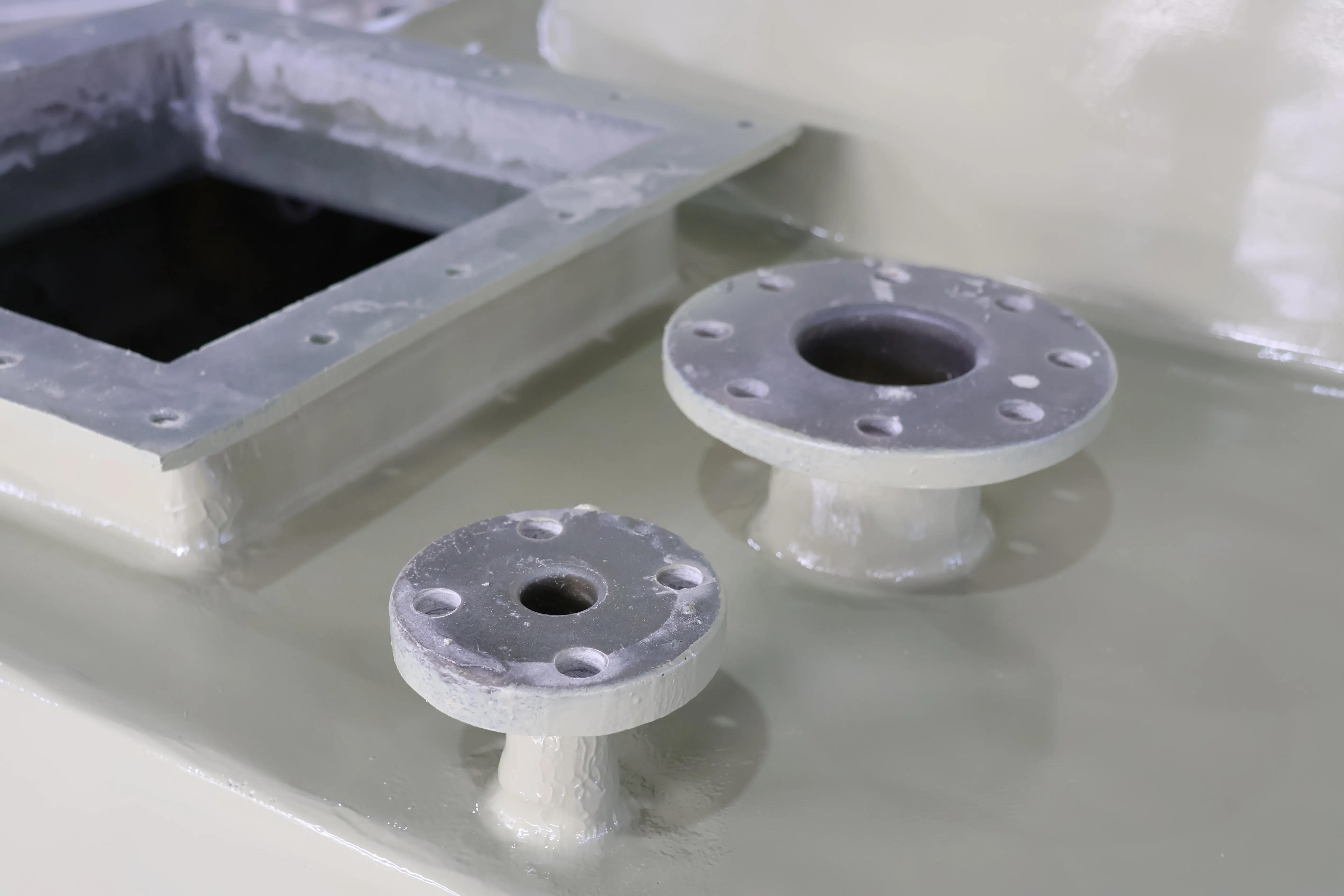
Flanges, dampers, supports, and ventilation connections all need to be compatible — both in material and dimension. When these come from different suppliers, it can lead to mismatched dimensions, delayed installation, and extra costs.
This is one reason customers choose us for one-stop sourcing. When the pipe, flanges, dampers, and supports all come from YAS, the fit is guaranteed.
Insist on Quality Documentation
We believe a reliable supplier should always provide:
- Material certificates for resin and glass fiber
- Hydrostatic test reports
- Dimensional inspection records
- Compliance certificates for the applicable standard
If third-party inspection is required for your project, let us know. We regularly accommodate BV, ABS, Moody, and other inspectors — and we arrange this before production starts, not after.
The Bottom Line
From our experience, choosing FRP pipe is not about picking the cheapest option or the thickest wall. It is about matching the material, dimensions, and connection type to the actual operating conditions.
When we get this right with our clients, the pipe performs reliably for decades with minimal maintenance.
We manufacture custom FRP pipe and accessories with ISO 9001-compliant processes at YAS, and we support third-party inspection from BV, ABS, and Moody. Tell us what your project needs — we will help you find the right specification, not just a product.