
Adsorption Towers
Horizontal Adsorption Tower
Built for demanding storage and process applications, YAS FRP tanks offer excellent corrosion resistance, durable construction, and flexible customization for different media and operating conditions.
YAS Can:
- Material
- FRP, anti-static FRP, flame-retardant FRP, SUS304/316, and HDPE.
- Closure
- RAL colors and other international standard colors are available.
- Standards
- GB, ISO, ASTM, and applicable North American standards available.
FRP Adsorption Tower
Product Overview
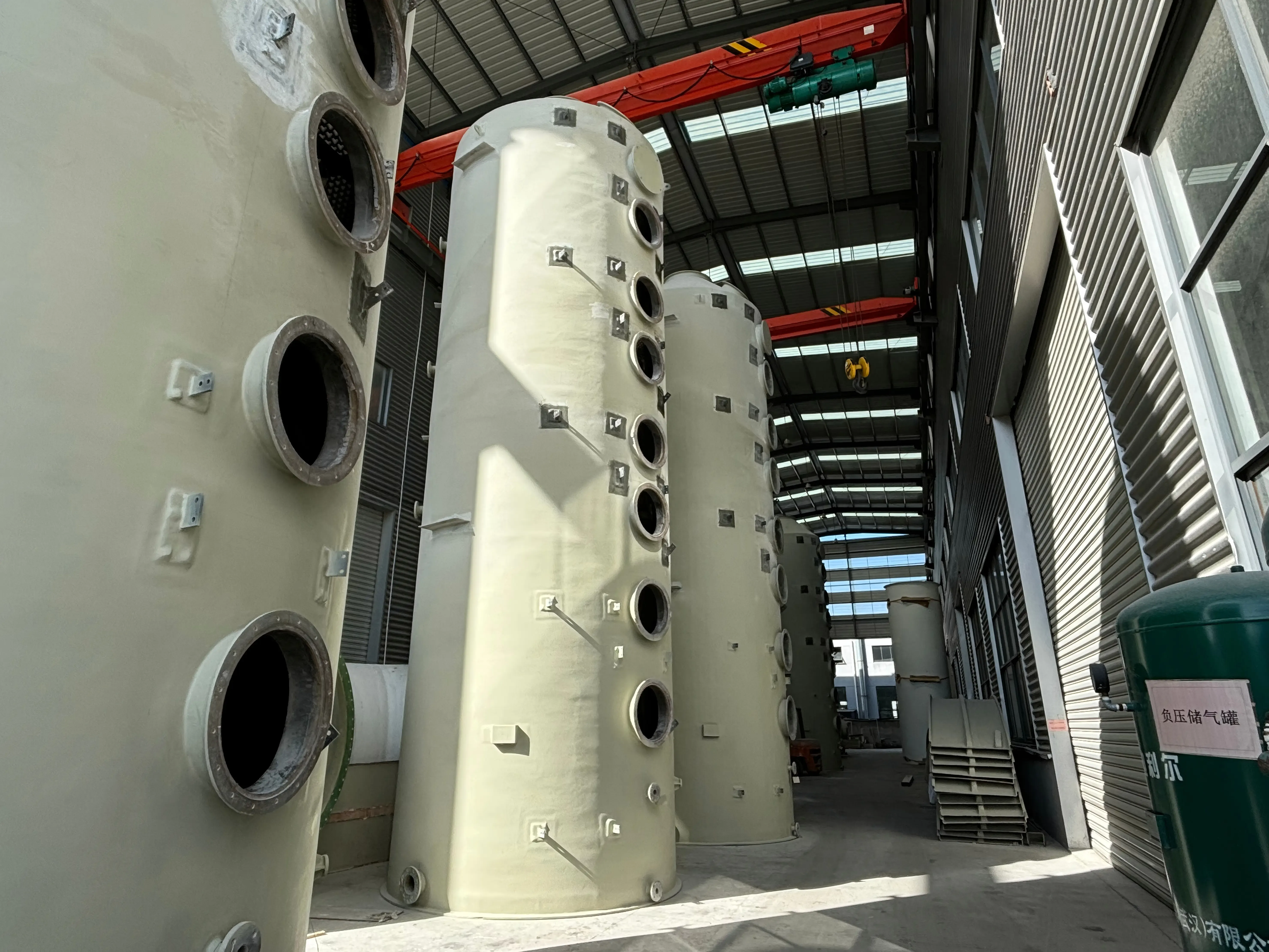
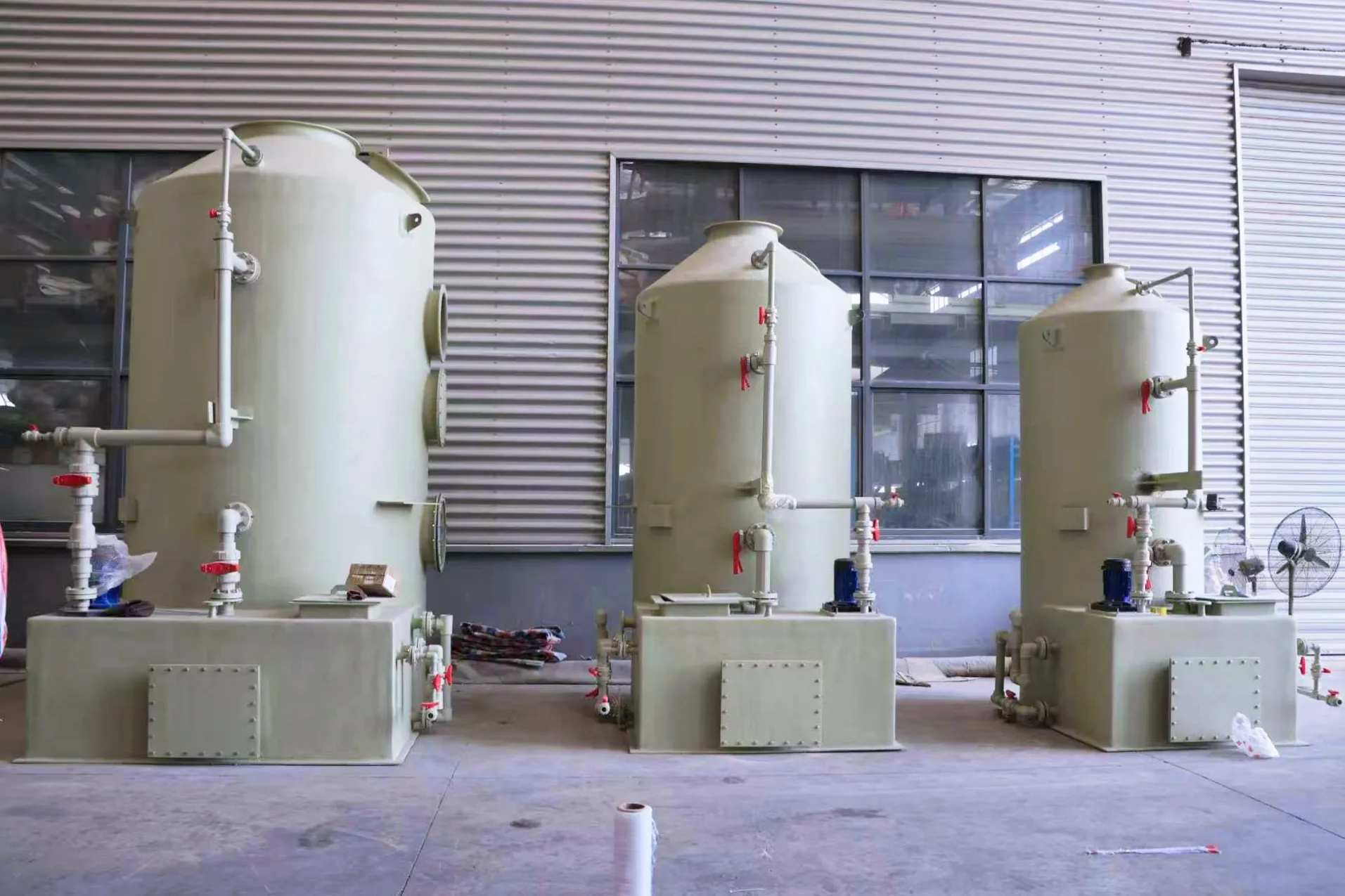
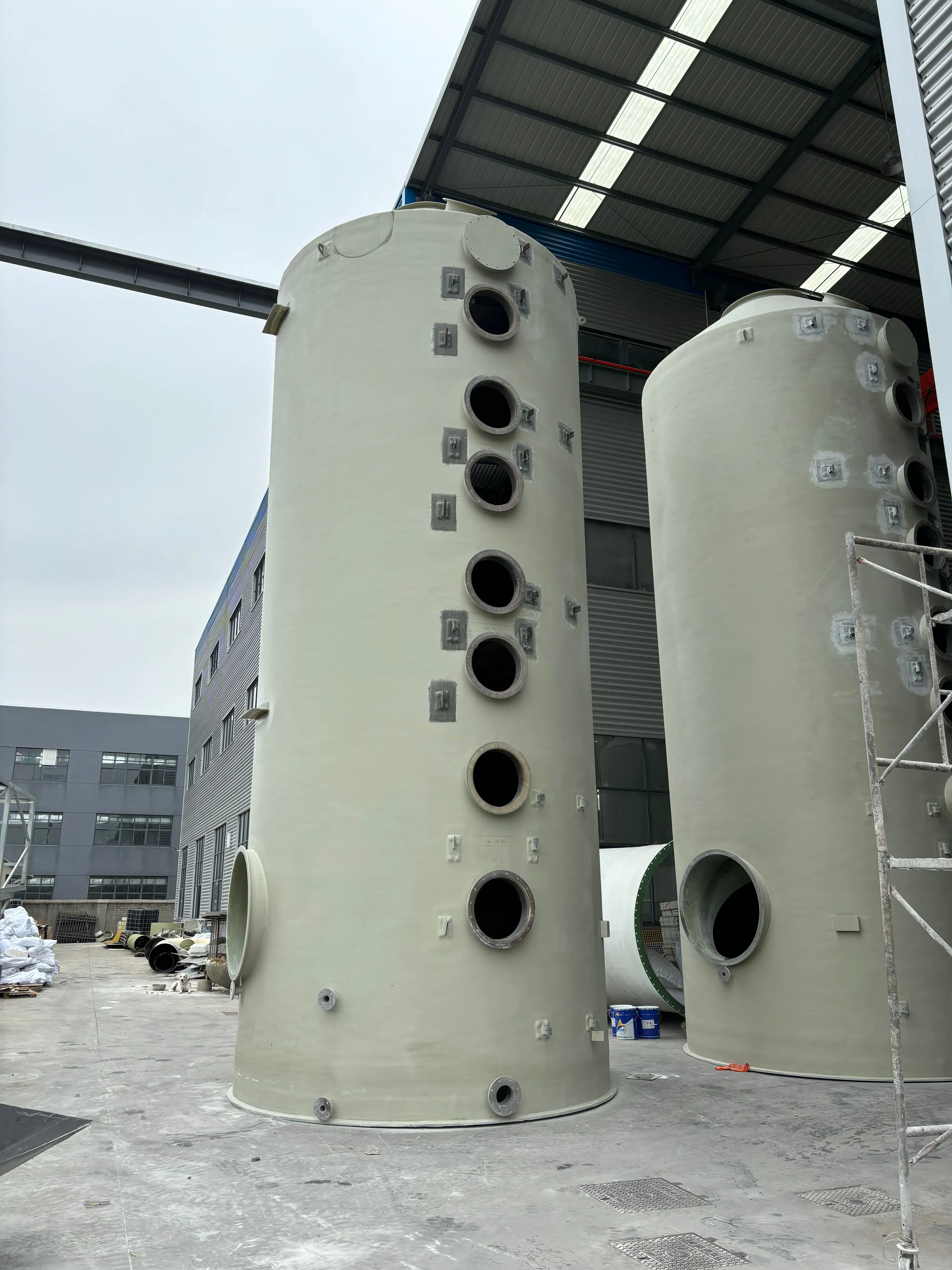
An FRP adsorption tower is a specialized air pollution control unit designed for the adsorption and purification of industrial exhaust gases. The tower shell is made of fiber-reinforced plastic (FRP) and can be designed in either a vertical or horizontal configuration to suit site conditions and space constraints.
The tower is filled with adsorbent media that capture and retain pollutants from the exhaust stream, helping achieve effective gas purification. With excellent corrosion resistance, the tower can also be customized with flame-retardant or anti-static properties as required. It is commonly used in combination with scrubber towers and biological odor control systems.
The FRP adsorption tower is suitable for corrosive exhaust gas applications in the chemical industry, wastewater treatment facilities, and hazardous waste treatment plants. It is also available as part of a complete exhaust gas treatment system for export projects.
Working Principle
After pretreatment to remove dust, oil mist, and excess moisture, the exhaust gas enters the FRP adsorption tower and passes through the internal adsorbent bed. Pollutant molecules are captured and concentrated within the micropores on the adsorbent surface, separating contaminants such as volatile organic compounds (VOCs), odors, and low concentrations of hydrogen sulfide (H₂S) and ammonia (NH₃) from the gas stream.
Vertical Adsorption Tower: Gas typically flows upward through the adsorbent bed. Its compact design minimizes the footprint, making it suitable for sites with limited horizontal space but sufficient overhead clearance.
Horizontal Adsorption Tower: Gas flows horizontally through the adsorbent bed. Its low-profile design is ideal for facilities with limited building height and sufficient floor space.
Once the adsorbent reaches saturation, the media can be replaced or regenerated through desorption, depending on the process requirements. The treated gas passes through a mist eliminator before discharge.
Applications
- Organic exhaust gas and odor control in chemical and fine chemical plants, as well as pharmaceutical production facilities
- Advanced odor removal at wastewater treatment plants and landfill leachate treatment facilities
- Treatment of low-concentration VOCs and malodorous gases in hazardous waste treatment facilities
- Advanced exhaust gas treatment in electroplating and surface treatment operations
- Odor adsorption and purification in food processing, slaughterhouses, and printing facilities
- Advanced treatment of corrosive exhaust gases from metal smelting and acid pickling operations
- Downstream polishing after ammonia stripping towers and scrubber towers
- Complete exhaust gas treatment systems for international projects, with vertical or horizontal configurations available to suit site requirements
Key Advantages of FRP Adsorption Towers
1. Corrosion-Resistant FRP Construction
The FRP shell offers excellent resistance to acids, alkalis, ammonia, hydrogen sulfide, and salt spray. It resists rust and helps reduce the risk of leakage, making it suitable for corrosive exhaust gas environments.
2. Flexible Design for Different Site Conditions
Both vertical and horizontal configurations are available. Vertical towers minimize the footprint where sufficient overhead clearance is available, while low-profile horizontal towers are ideal for facilities with height restrictions.
3. Optional Flame-Retardant and Anti-Static Properties
Flame-retardant or anti-static resin systems can be selected for applications involving combustible VOCs, helping reduce fire and static electricity risks. The design can be tailored to applicable fire safety and hazardous-area requirements.
4. Lightweight Yet Strong
FRP offers a high strength-to-weight ratio, making lifting and installation easier while reducing the load requirements for supporting foundations.
5. Modular Design for Easy Maintenance
The adsorbent section can be designed with pull-out modules or maintenance manways to simplify media loading, replacement, and routine maintenance.
6. Reliable Sealing Performance
The integrated FRP construction and sealed flange connections help prevent the escape of corrosive exhaust gases.
7. Customized Manufacturing
Tower dimensions, adsorbent bed configuration, and media types can be tailored to the exhaust gas flow rate, pollutant concentration, and process requirements. Inlet and outlet flanges, access manways, and other connections can also be customized.
Operating Conditions and Selection Guide
Recommended Applications
- Advanced treatment of low-concentration VOCs and malodorous gases
- Polishing of exhaust streams containing trace amounts of H₂S and NH₃
Configuration Selection
- Limited floor space with sufficient overhead clearance: Vertical adsorption tower
- Limited building height with sufficient floor space: Horizontal adsorption tower
Common Adsorbent Media
Activated carbon, activated carbon fiber, molecular sieves, and adsorption resins.
Important Considerations
- Pretreatment is essential: Remove dust, oil mist, and excessive moisture upstream to prevent adsorbent blockage and premature loss of adsorption capacity.
- Consider the inlet concentration: Adsorption capacity is finite. Direct treatment of high-concentration exhaust gas is generally not recommended without evaluating the process. Upstream scrubbing or other suitable pretreatment may be required.
- Control static electricity: For combustible exhaust gas applications, select an appropriate anti-static FRP construction and provide proper electrical bonding and grounding. Additional explosion protection measures should be determined through a project-specific hazard assessment.
System Components
- FRP tower shell (vertical or horizontal)
- Inlet gas distribution section
- Adsorbent bed
- Adsorbent support layer
- Maintenance manway
- Adsorbent loading and unloading ports
- Mist elimination section
- Inlet and outlet flanges
- Differential pressure monitoring connections
- Supporting induced-draft fan