
Frp Vessels
Frp Vessels
Built for demanding storage and process applications, YAS FRP tanks offer excellent corrosion resistance, durable construction, and flexible customization for different media and operating conditions.
YAS Can:
- Material
- FRP, anti-static FRP, flame-retardant FRP, SUS304/316, and HDPE.
- Closure
- RAL colors and other international standard colors are available.
- Standards
- GB, ISO, ASTM, and applicable North American standards available.
FRP Tanks & Vessels
Product Overview
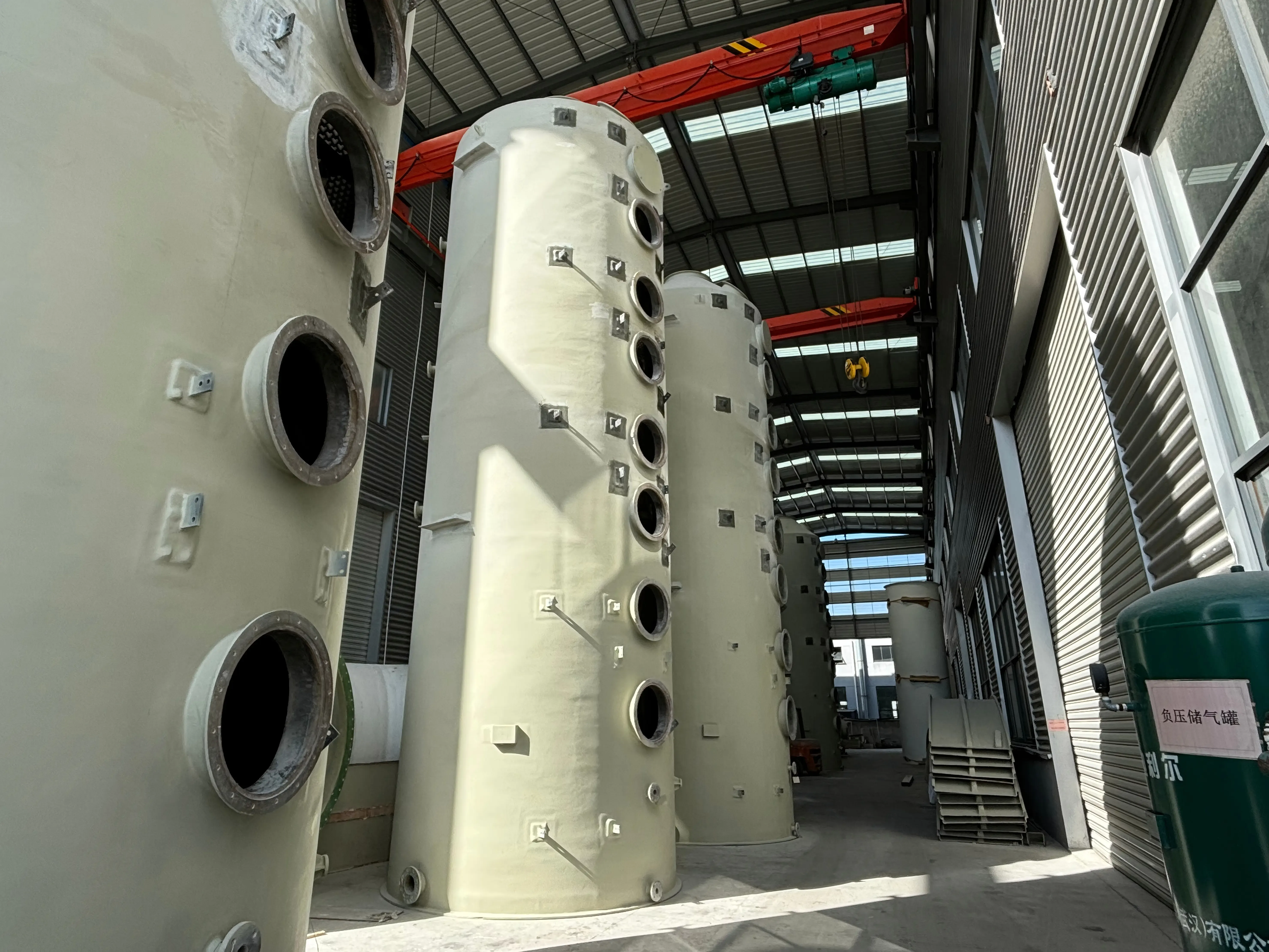
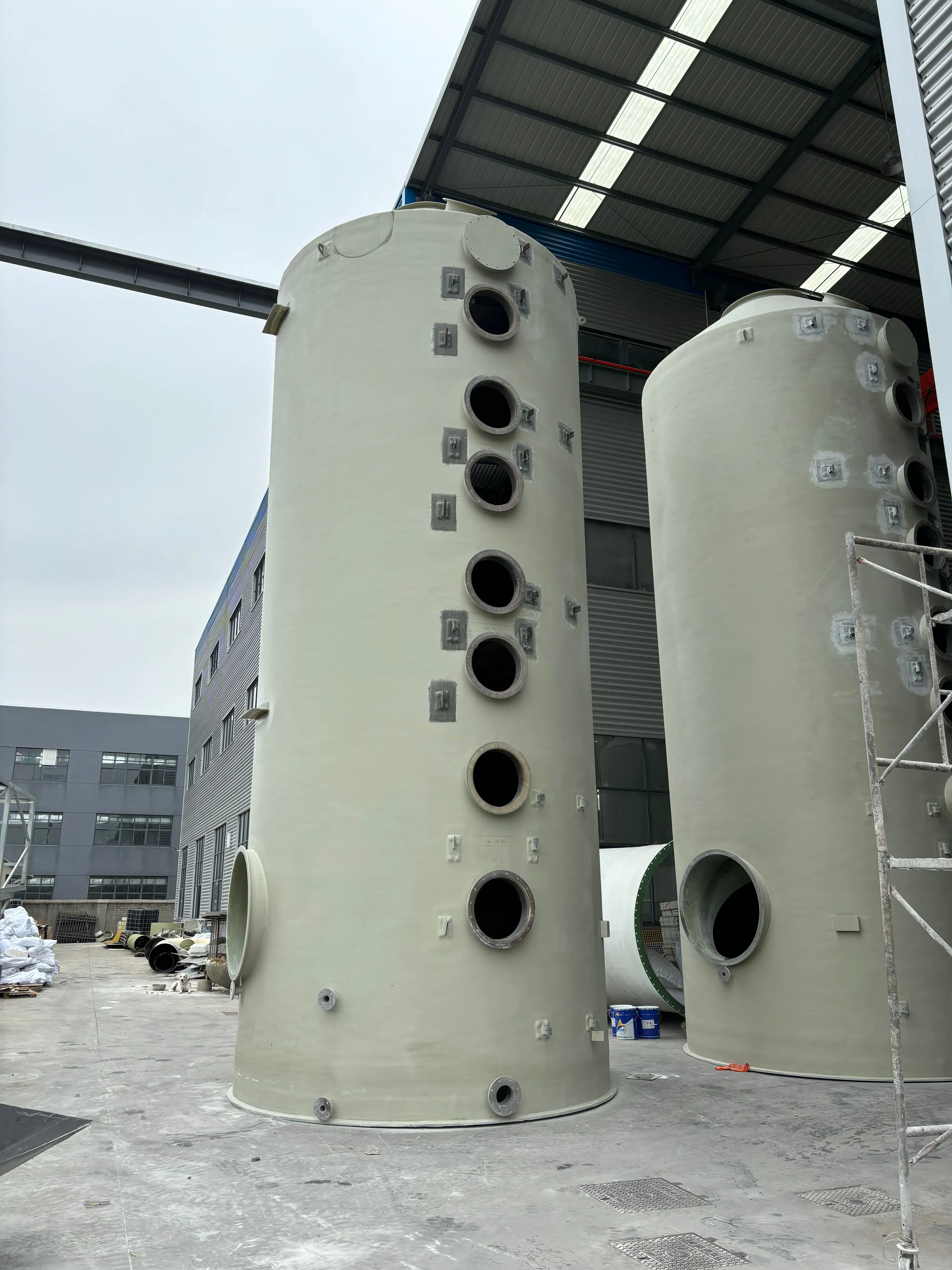
FRP tanks and vessels serve as corrosion-resistant storage containers and can also be designed as integrated exhaust gas treatment systems. Manufactured using FRP hand lay-up or filament winding processes, they offer excellent resistance to acids and alkalis. Flame-retardant and anti-static options are available to meet specific application requirements.
As storage containers, they are suitable for acids, alkalis, treatment chemicals, wastewater, and process liquids. For air pollution control applications, the tank structure can integrate scrubbing and gas absorption units into a complete treatment system for international projects.
FRP tanks and vessels can be supplied with FRP ductwork and platforms, and integrated with stripping towers, scrubber towers, or biological odor control systems to meet the needs of overseas environmental engineering projects.
Working Principle
1. Storage Applications
FRP tanks and vessels are used to store sulfuric acid, sodium hydroxide solutions, treatment chemicals, process wastewater, and intermediate liquids. Their corrosion-resistant construction and sealed design help protect the tank from chemical attack and reduce the risk of leakage and environmental contamination.
2. Integrated Exhaust Gas Treatment Systems
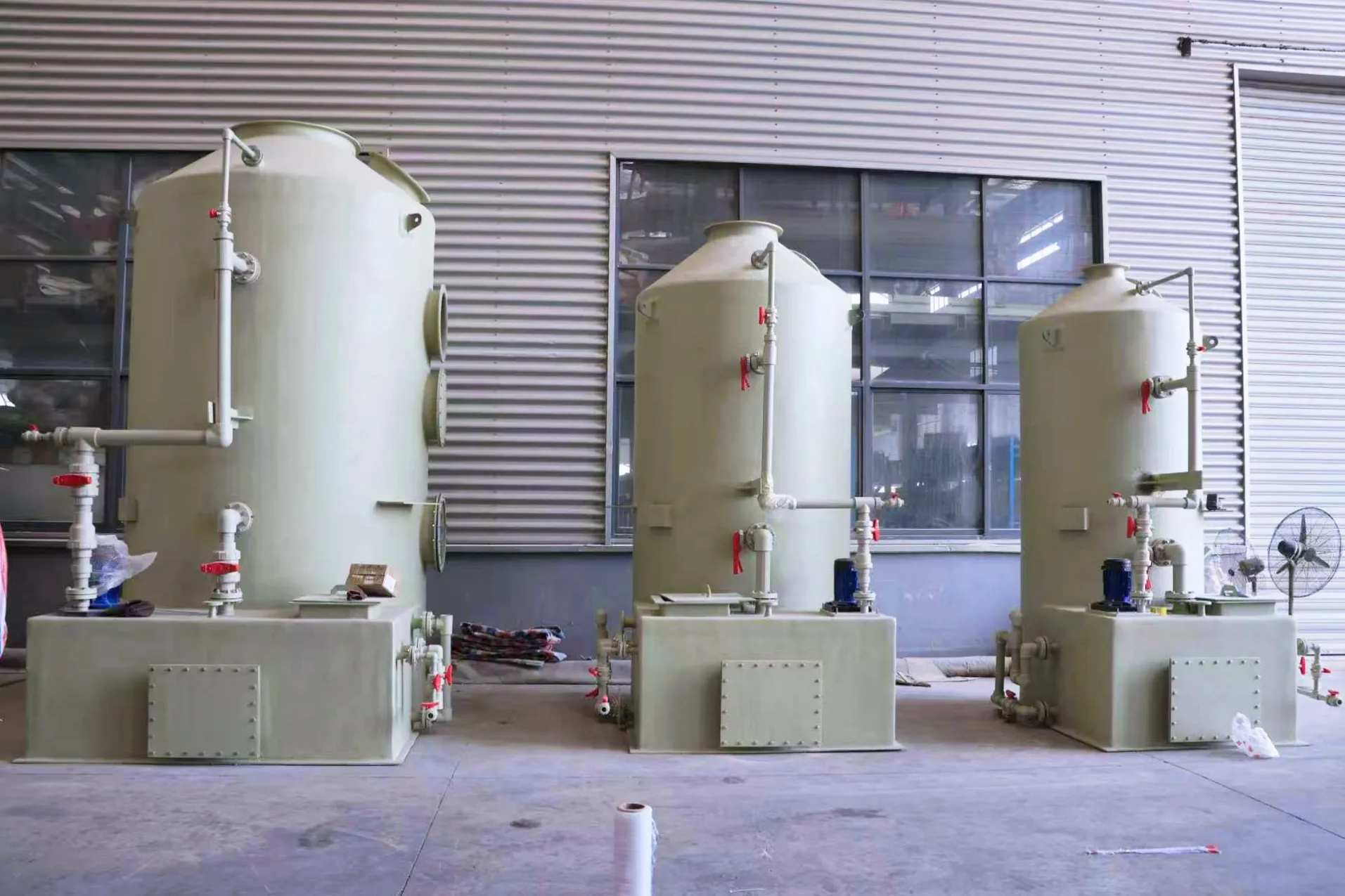
Spray scrubbing, gas absorption, mist elimination, and a recirculation tank can be integrated into a single FRP housing.
Exhaust gas enters the system and flows in countercurrent contact with the circulating scrubbing liquid. Acid-base neutralization and pollutant absorption take place during this process. The treated gas then passes through a mist eliminator before discharge.
The integrated system is factory-assembled and designed for convenient containerized shipping, making it well suited for export projects. Its modular, ready-to-install design helps reduce on-site installation time for overseas customers.
Applications
- Storage of process chemicals and liquids, as well as compact integrated exhaust gas treatment projects in chemical, fine chemical, and pharmaceutical industries
- Storage of acidic and alkaline chemicals and integrated acid mist treatment systems for electroplating and surface treatment facilities
- Chemical storage tanks and compact exhaust gas absorption systems for wastewater treatment plants and landfill leachate treatment facilities
- Temporary storage of hazardous waste liquids and integrated exhaust gas treatment systems for hazardous waste treatment facilities
- Chemical storage for wastewater treatment and preliminary odor control in livestock farming and food processing
- Export environmental engineering projects requiring integrated FRP exhaust gas treatment systems or chemical storage tanks
- Recirculation tanks and absorption liquid storage for ammonia stripping and gas scrubbing systems, including integrated exhaust gas treatment units
Key Advantages of FRP Tanks & Vessels
1. Excellent Corrosion Resistance
FRP construction offers resistance to a wide range of corrosive media, including acids, alkalis, ammonia, hydrogen sulfide, and salt spray. It does not rust like conventional steel and helps reduce leakage risks when properly designed for the service conditions.
2. Customizable Functional Options
Flame-retardant and anti-static resin systems are available for applications with specific fire safety or static control requirements. The final configuration can be tailored to project specifications and applicable regulations.
3. Integrated Design for Export Projects
Spray systems, packing, mist eliminators, and recirculation tanks can be integrated into a single FRP housing. Factory prefabrication and modular construction simplify containerized shipping and on-site assembly, helping shorten installation schedules for overseas projects.
4. Lightweight Yet Strong
FRP tanks are significantly lighter than comparable steel tanks, helping reduce transportation and lifting costs while lowering foundation load requirements.
5. Leak-Resistant Construction
Integrated construction with fewer joints provides reliable sealing performance and helps prevent the leakage of corrosive liquids and exhaust gases.
6. Flexible Customization
Tank capacity, configuration, openings, manways, and flange connections can be customized. Vertical or horizontal designs and separate or integrated configurations are available to accommodate different site conditions and project interface requirements.
7. Lower Maintenance Requirements
FRP does not require routine rust removal or repainting like conventional steel. With appropriate material selection and installation, it offers durable performance for long-term outdoor service.
Operating Conditions and Selection Guide
Storage Applications
Suitable for acids, alkalis, treatment chemicals, wastewater, salt solutions, and other corrosive process liquids, subject to material compatibility.
Equipment Applications
Integrated FRP gas absorption and scrubbing systems are suitable for compact exhaust gas treatment applications, including export environmental engineering projects.
Available Options
- Standard corrosion-resistant FRP
- Flame-retardant FRP
- Anti-static FRP
Important Considerations
- Chemical compatibility: Resin selection must be based on the chemical composition, concentration, and operating temperature of the stored medium. High-temperature or strongly oxidizing chemicals may require specialized resin systems.
- Applicable standards: For export projects, applicable design and certification requirements should be confirmed with the customer. UL, ASME, or other standards may apply depending on the equipment type and project specifications.
- Foundation and accessories: Large tanks require appropriate foundation design and, where necessary, secondary containment. Level indicators, overflow connections, and drain outlets can be provided according to project requirements.
System Components
Standard Tank Configuration
- FRP tank shell
- Maintenance manway
- Flanged nozzles and pipe connections
- Level indicator connection
- Drain outlet
- Overflow outlet
Additional Components for Integrated Exhaust Gas Treatment Systems
- Internal gas distribution system
- Spray piping
- Packing bed
- Mist eliminator
- Circulation pump
- Chemical dosing system
- Instrumentation connections