
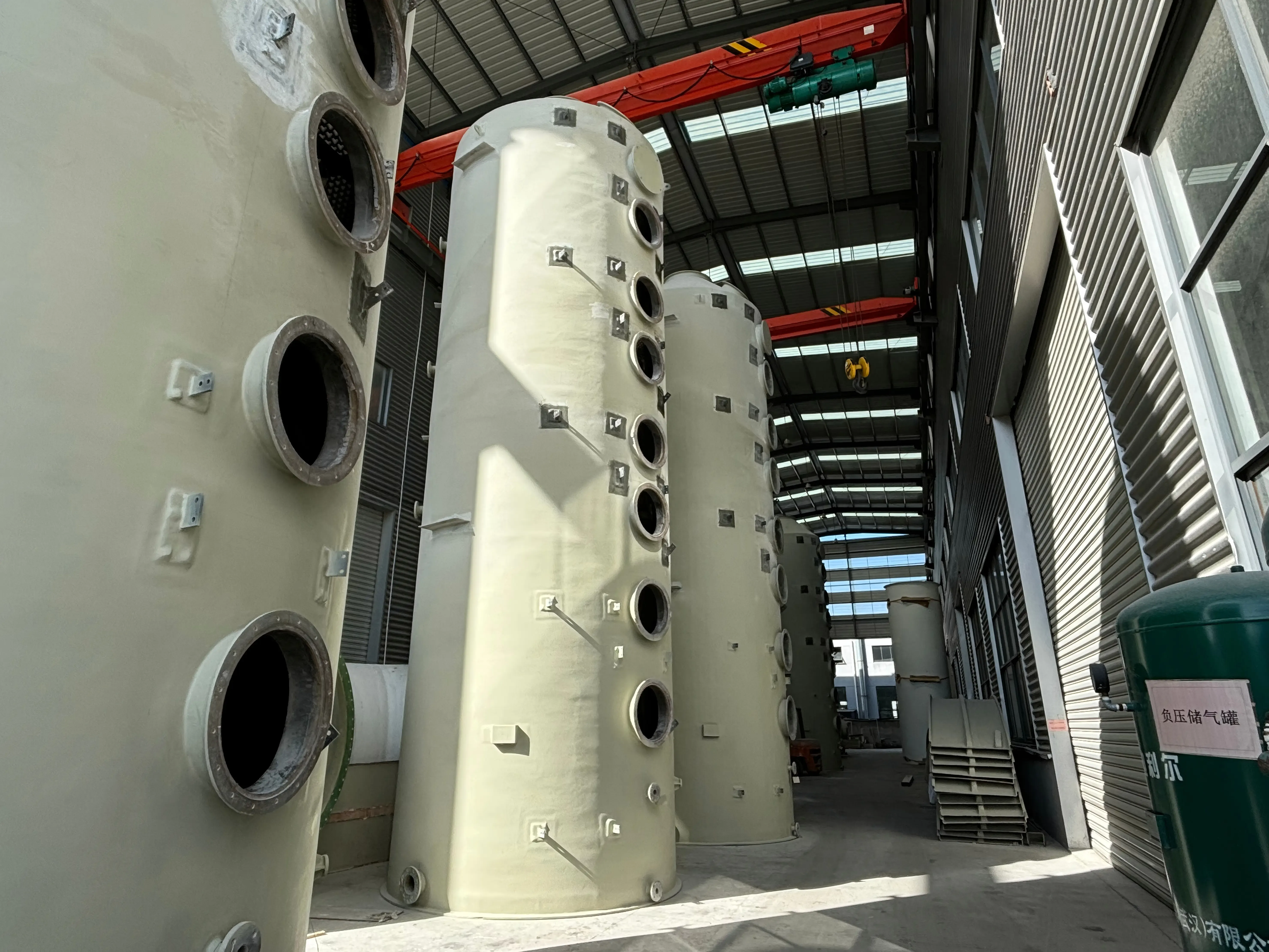
Bio-trickling Filters
FRP Biological Trickling Filter
Built for demanding storage and process applications, YAS FRP tanks offer excellent corrosion resistance, durable construction, and flexible customization for different media and operating conditions.
YAS Can:
- Material
- FRP, anti-static FRP, flame-retardant FRP, SUS304/316, and HDPE.
- Closure
- RAL colors and other international standard colors are available.
- Standards
- GB, ISO, ASTM, and applicable North American standards available.
FRP Biological Trickling Filter
Product Overview
The FRP Biological Trickling Filter is a core piece of equipment for biological odor control, designed to treat odorous gases containing ammonia, hydrogen sulfide (H₂S), and low concentrations of volatile organic compounds (VOCs).
Its FRP housing offers resistance to acids, alkalis, and corrosion. Unlike a conventional biofilter, a biological trickling filter uses continuous liquid recirculation, allowing operators to control pH and nutrient levels. This provides greater flexibility when handling fluctuating pollutant loads, making it suitable for low- to medium-concentration odor streams from chemical plants, wastewater treatment facilities, hazardous waste areas, and ammonia stripping systems.
Working Principle
- Gas Pretreatment: Exhaust gas passes through a pretreatment stage to remove dust and adjust the temperature before entering the filter from the bottom.
- Gas-Liquid Contact: The gas flows upward through the packing bed while nutrient-rich recirculation liquid is evenly sprayed from the top, keeping the packing surface moist and supporting biofilm growth.
- Biological Degradation: Odorous compounds such as H₂S, NH₃, mercaptans, and low concentrations of VOCs are absorbed by the liquid film and degraded by microorganisms in the biofilm. Depending on the pollutants and operating conditions, the by-products may include carbon dioxide, water, sulfates, and nitrates.
- Mist Removal and Discharge: Treated gas passes through a mist eliminator before discharge. The recirculating liquid supplies nutrients, removes metabolic by-products, and is periodically discharged to the wastewater treatment system.
The key difference from a conventional biofilter is its continuously recirculated spray liquid, which allows active control of pH and nutrient levels.
Applications
- Municipal wastewater treatment plants, lift stations, and sludge dewatering rooms
- Waste transfer stations and landfill leachate treatment facilities
- Chemical, fine chemical, and pharmaceutical production facilities
- Livestock farms and biogas slurry treatment facilities
- Slaughterhouses, food processing plants, and breweries
- Hazardous waste storage and liquid waste treatment areas
- Pulp and paper mills and textile dyeing facilities
- Off-gas treatment downstream of ammonia stripping towers
Key Advantages
Corrosion-Resistant FRP Housing
Designed to resist corrosive gases such as H₂S and ammonia, with good aging resistance and leak-resistant construction when properly manufactured and installed.
Adjustable Operating Conditions
The recirculation system allows pH adjustment and nitrogen and phosphorus nutrient dosing, helping maintain microbial activity and handle fluctuations in pollutant loads.
Reduced Packing Clogging Risk
Continuous liquid trickling helps wash away excess and aging biofilm, reducing the risk of packing blockage and potentially extending maintenance intervals.
Stable, Cost-Effective Operation
Suitable for many low- to medium-concentration sulfur- and ammonia-based odor streams, with relatively low chemical consumption under appropriate operating conditions.
Lightweight and Easy to Install
Modular FRP construction reduces structural loading and supports convenient installation in outdoor locations.
Customized Design
Tower diameter, packing height, gas distribution, and spray systems can be designed according to gas flow rate, pollutant concentration, and required contact time.
Operating Conditions and Selection Guide
- Suitable applications: Continuous odor streams with low to medium concentrations of H₂S, NH₃, sulfur-containing compounds, and selected low-concentration VOCs.
- Typical empty bed residence time (EBRT): 10–45 seconds, subject to pollutant characteristics and process design.
- Compared with biofilters: Often better suited to applications with fluctuating pollutant loads or significant acid generation from biological oxidation, such as H₂S treatment.
- Pretreatment: Dust and oil mist should be removed upstream to help prevent packing blockage.
- Temperature: An inlet temperature of approximately 20–35°C is a typical design range; the optimum range depends on the selected microorganisms and process.
- Liquid management: A recirculation tank, online pH monitoring, nutrient dosing, and periodic liquid discharge are required.
Actual removal performance depends on gas composition, concentration, temperature, humidity, residence time, and biological operating conditions. Material selection must also be checked against the specific chemical environment.
System Components
- FRP biological trickling filter housing
- Exhaust gas pretreatment section
- Gas distribution system
- Specialized biological packing
- Packing support layer
- Spray and liquid trickling system
- Mist eliminator
- Recirculation tank
- Online pH monitoring system
- Chemical dosing and nutrient replenishment system
- Induced-draft fan
- Inspection manholes
- Drain piping and valves