
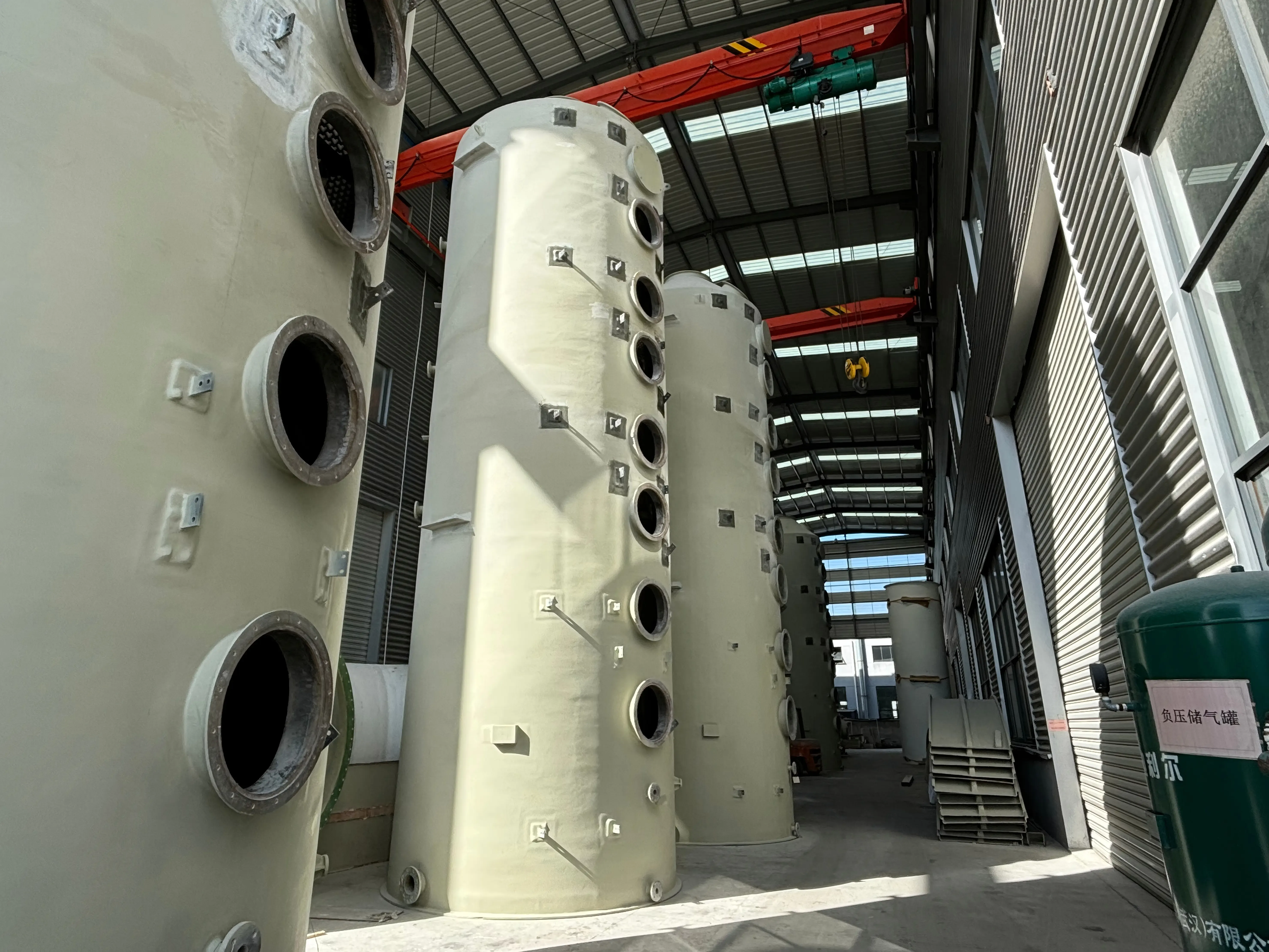
Biological Filters
FRP Biofilter
Built for demanding storage and process applications, YAS FRP tanks offer excellent corrosion resistance, durable construction, and flexible customization for different media and operating conditions.
YAS Can:
- Material
- FRP, anti-static FRP, flame-retardant FRP, SUS304/316, and HDPE.
- Closure
- RAL colors and other international standard colors are available.
- Standards
- GB, ISO, ASTM, and applicable North American standards available.
FRP Biofilter
Product Overview
The FRP Biofilter is designed for biological odor control, using microorganisms to break down odorous compounds in exhaust gas. It is widely used in wastewater treatment plants, waste handling facilities, livestock operations, and chemical processing industries.
Made from fiber-reinforced plastic (FRP), the filter housing offers resistance to acids, alkalis, and corrosion, along with good leak resistance. The system can incorporate a pre-wash section, gas distribution, and recirculating spray systems. With low operating costs and minimal secondary waste, it provides an effective solution for industrial odor control. It can also be used with off-gas treatment systems for ammonia stripping towers.
Working Principle
- Pre-Washing and Conditioning: Collected odorous gas enters the pre-wash section, where spray water helps regulate temperature and humidity while removing dust and some water-soluble pollutants. This prepares the gas for biological treatment.
- Gas Distribution: The pretreated gas is evenly distributed through the biological packing bed.
- Biological Degradation: A mature biofilm grows on the packing surface. Odorous compounds such as ammonia (NH₃), hydrogen sulfide (H₂S), methanethiol, and selected VOCs are absorbed into the moist biofilm and degraded by microorganisms. Depending on the compounds present and operating conditions, the end products may include carbon dioxide, water, sulfates, and nitrates.
- Mist Removal and Discharge: Treated gas passes through a mist eliminator before discharge in accordance with applicable emission requirements.
The core principle is biological degradation at moderate temperatures, reducing the need for large quantities of chemical treatment agents.
Applications
- Odor control at landfills, waste transfer stations, and leachate treatment facilities
- Municipal wastewater treatment plants, lift stations, and sludge dewatering rooms
- Livestock farms and biogas slurry treatment facilities
- Chemical, pharmaceutical, and fine chemical production facilities
- Slaughterhouses, food processing plants, and breweries
- Hazardous waste storage and liquid waste treatment facilities
- Pulp and paper mills, textile dyeing plants, and rubber processing facilities handling sulfur-containing or organic odors
- Additional odor treatment for off-gas from ammonia stripping towers
Key Advantages
Corrosion-Resistant FRP Housing
Designed to withstand corrosive environments containing H₂S and ammonia, with resistance to aging and suitability for acidic or alkaline odor streams when the resin system is properly selected.
Lightweight and Easy to Install
Modular FRP construction simplifies on-site assembly, reduces foundation loading, and supports outdoor installation.
Low Operating Costs
Biological degradation reduces reliance on chemical agents. Energy consumption depends on the selected fan, recirculation pump, and system design.
Stable Odor Treatment
The active biofilm can effectively treat many low-concentration odor streams and tolerate a degree of variation in pollutant loading.
Reduced Secondary Waste
Biological treatment converts biodegradable pollutants into simpler compounds, minimizing chemical use and secondary waste generation. Small amounts of recirculation wastewater can be returned to the wastewater treatment system where appropriate.
Customized Design
Tower dimensions, packing height, gas distribution, and spray systems can be tailored to gas flow rate, pollutant concentration, and required residence time.
Operating Conditions and Selection Guide
- Suitable applications: Continuous, low-concentration odor streams containing H₂S, NH₃, sulfur-containing organic compounds, and selected low-concentration VOCs.
- Typical empty bed residence time (EBRT): 15–60 seconds, depending on gas composition and treatment requirements.
- Pretreatment: High dust or oil mist loads require upstream treatment to help prevent packing blockage.
- Temperature: A typical design range is approximately 25–35°C, depending on the microorganisms and process. Excessive temperatures may inhibit or damage biological activity.
- Humidity: Adequate moisture must be maintained to prevent the biofilm from drying out and losing activity.
- Performance: Removal efficiency depends on pollutant composition, concentration, temperature, humidity, residence time, and biological operating conditions.
System Components
- FRP biofilter housing
- Gas pre-wash section
- Gas distribution system
- Specialized biological packing
- Packing support layer
- Recirculating spray and humidification system
- Mist eliminator
- Recirculation tank
- Induced-draft fan
- Inspection manholes
- Exhaust outlet
- Sludge and drain piping with valves